Understanding your annual salary when you earn an hourly wage helps you budget better, plan your finances, and evaluate job offers with confidence. If you’re wondering 14 an hour is how much a year, this guide provides exact calculations, tax breakdowns, and real budgeting strategies you can use today.
Working at $14 per hour translates to approximately $29,120 annually for full-time employment. Your actual take-home pay depends on several factors including federal taxes, state taxes, work hours, and location. Use our Salary to Hourly Calculator to instantly convert your wage to annual income. This guide breaks down everything you need to know about earning $14 hourly, from gross income calculations to net pay after taxes, cost of living considerations, and whether this wage works for your needs.
Whether you’re evaluating a job offer, planning your monthly budget, or considering negotiating for higher pay, this detailed analysis helps you make informed financial decisions. You’ll learn the exact formulas, see real examples, and discover actionable strategies to stretch every dollar.
Annual Income for 14 an Hour
The Standard Calculation:
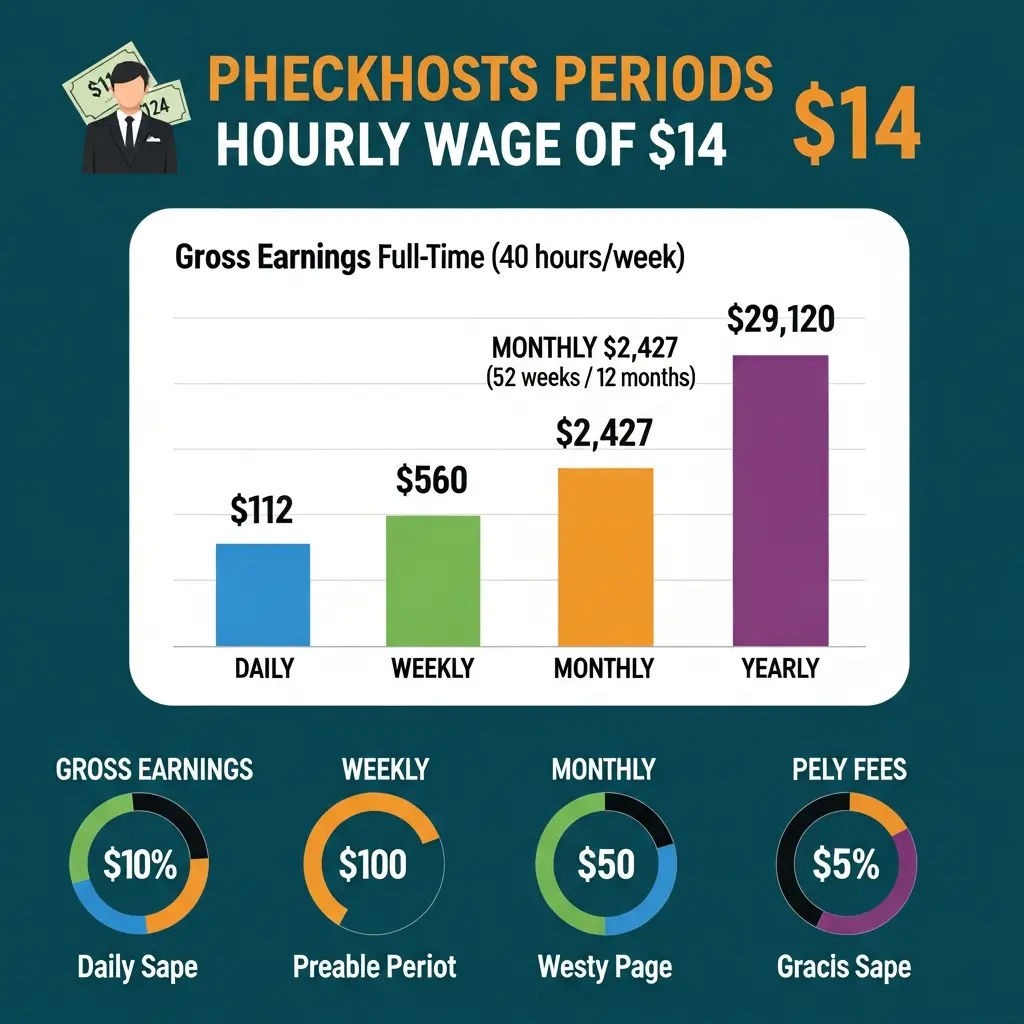
- Yearly Salary: $29,120 (working 40 hours per week for 52 weeks)
- Monthly Income: $2,426.67
- Weekly Pay: $560
- Daily Rate: $112 (based on 8-hour workday)
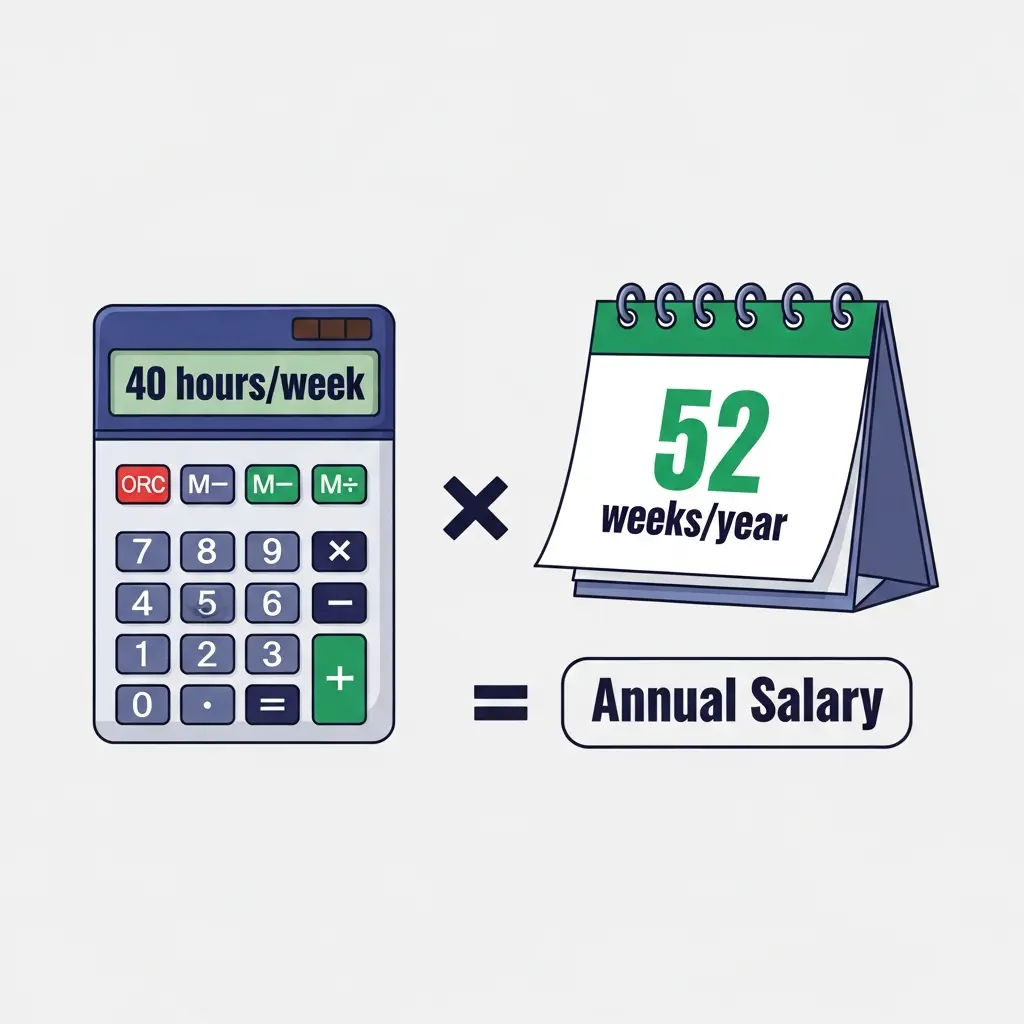
Formula Breakdown: $14/hour × 40 hours/week × 52 weeks/year = $29,120 annually
This calculation assumes full-time employment with standard work hours and no unpaid vacation time. The gross income 14 an hour generates is based on 2,080 total working hours per year (40 hours × 52 weeks). This represents your salary before any deductions or withholdings.
With Unpaid Vacation: If you take 2 weeks of unpaid vacation annually, your calculation changes: $14/hour × 40 hours/week × 50 weeks/year = $28,000
The difference equals $1,120 in lost earnings. Many entry-level positions offer limited or no paid time off, making this scenario common for workers just starting their careers.
Exact 2026 Calculation: The year 2026 has 261 weekdays (Monday-Friday). Working every weekday at 8 hours per day gives you: 261 days × 8 hours = 2,088 hours $14/hour × 2,088 hours = $29,232 per year
This represents $112 more than the standard calculation. Some employers calculate pay based on actual working days rather than the simplified 52-week formula, which can slightly increase your annual earnings.
Your actual earnings may vary based on overtime, part-time hours, or irregular schedules. Always verify with your employer regarding paid time off policies and expected work hours before accepting any position. According to the Bureau of Labor Statistics, approximately 23% of American workers lack access to paid vacation days, making these calculations critical for accurate financial planning.
How to Calculate 14 Hourly to Salary
Converting your 14 hourly to salary requires understanding a simple formula. Here’s the step-by-step process:
Step 1: Determine Weekly Hours Standard full-time employment = 40 hours per week Part-time varies (typically 20-35 hours)
Step 2: Calculate Weekly Earnings $14/hour × 40 hours = $560 per week
Step 3: Determine Annual Weeks Worked
- With no vacation: 52 weeks
- With 2 weeks unpaid vacation: 50 weeks
- With paid vacation: 52 weeks (you still get paid)
Step 4: Calculate Annual Salary $560/week × 52 weeks = $29,120/year
Alternative Method: Total Annual Hours 40 hours/week × 52 weeks = 2,080 hours/year $14/hour × 2,080 hours = $29,120/year
For Part-Time Work: If you work 30 hours per week: $14/hour × 30 hours/week × 52 weeks = $21,840/year
For Overtime Scenarios: Standard overtime pay is time-and-a-half ($21/hour for overtime) Regular: $14 × 40 hours = $560 Overtime: $21 × 5 hours = $105 Weekly total: $665 × 52 weeks = $34,580/year
The FLSA requires overtime pay at 1.5 times the regular rate for hours exceeding 40 per week. This can boost your annual income by $5,460 with just 5 weekly overtime hours.
What Is 14 Dollars an Hour Annually After Taxes?
While knowing what is 14 dollars an hour annually in gross income matters, your take-home pay tells the real story. Workers in states like Texas with no state income tax keep significantly more of their $29,120. Federal taxes, state taxes, and FICA contributions reduce your paycheck substantially.
Federal Tax Breakdown:
For a single filer earning $29,120 annually in 2026:
- Gross Annual Salary: $29,120
- Federal Income Tax: approximately $2,350 (12% tax bracket after standard deduction)
- Social Security Tax (6.2%): $1,805
- Medicare Tax (1.45%): $422
- Total Federal Taxes: approximately $4,577
Estimated Annual Take-Home Pay (Federal Only): $24,543 Monthly Net Income: approximately $2,045 Weekly Take-Home: approximately $472
FICA Taxes (7.65% total):
- Social Security: 6.2% on all earnings up to $184,500
- Medicare: 1.45% on all earnings
- Combined FICA: $2,227 annually on $29,120 income
Standard Deduction 2026: The standard deduction is $14,600 for single filers, meaning you only pay federal income tax on $14,520 of your income ($29,120 minus $14,600).
State Tax Impact:
States With NO Income Tax: Alaska, Florida, Nevada, South Dakota, Tennessee, Texas, Washington, Wyoming, New Hampshire
- Estimated annual take-home: $24,543
States With High Income Tax:
- California: approximately $22,800 take-home
- New York: approximately $23,100 take-home
- Massachusetts: approximately $23,300 take-home
Average State (5% state tax): Additional $1,456 in state taxes Annual take-home: approximately $23,087
Pre-Tax Deductions:
- 401(k) contributions (pre-tax)
- Health insurance premiums (pre-tax)
- HSA/FSA contributions (pre-tax)
Contributing $2,000 to a 401(k) reduces your taxable income to $27,120, saving approximately $240 in federal taxes.
How Much Is 14 an Hour Monthly, Weekly, and Daily?
Breaking down your salary into different time periods helps with budgeting and cash flow planning.
Monthly Breakdown:
$29,120/year ÷ 12 months = $2,426.67/month (gross)
After Federal Taxes: approximately $2,045/month After Federal & State Taxes (average): approximately $1,924/month
Weekly Income: $14/hour × 40 hours/week = $560 (gross) After taxes: approximately $472/week
Bi-Weekly Pay: $560 × 2 = $1,120 gross per paycheck After taxes: approximately $944 bi-weekly
According to the Bureau of Labor Statistics, 43% of American workers receive bi-weekly pay, making it the most common pay period.
Daily Earnings: 8-hour workday: $14 × 8 = $112/day (gross) After taxes: approximately $94/day
Understanding your daily rate helps you evaluate the cost of missing work. One unpaid sick day costs you $94 in take-home pay.
Is $14 an Hour a Good Wage in 2026?
Whether $14 per hour provides sufficient income depends on your location, family size, and lifestyle.
Comparison to National Benchmarks:
Federal Minimum Wage: $7.25/hour ($15,080/year)
- $14/hour is 93% higher than federal minimum wage. Workers stepping up from $13 an hour gain $2,080 per year – see our $13 an hour breakdown for comparison.
Median U.S. Hourly Wage: $23.60/hour
- $14/hour is 41% below the national median
Average U.S. Hourly Wage: $35.70/hour
- $14/hour is 61% below the national average
Living Wage Reality:
A living wage represents the minimum income needed to cover basic necessities without government assistance. Unfortunately, $14/hour falls short in every U.S. state.
Living Wage by State (Single Adult, 2026):
- Lowest: South Dakota at $14.85/hour
- Highest: Massachusetts at $19.91/hour
- National Average: approximately $16.50/hour
Key Finding: At $14/hour, you earn BELOW the living wage in all 50 states.
For Families:
- One adult, one child: Requires $18-24/hour
- One adult, two children: Requires $22-28/hour
- Two adults, two children: Requires $15-20/hour per working adult
Where $14/Hour Works Better:
Lower Cost-of-Living States: Mississippi, Arkansas, Alabama, West Virginia offer more affordable living with lower housing costs and reduced overall expenses.
With Additional Support:
- Living with family (shared expenses)
- Employer-provided health insurance
- Subsidized housing
- Second income from partner
Career Context:
$14/hour may be acceptable as an entry-level position with growth potential, part-time work while in school, or first job out of high school. However, it’s insufficient for supporting a family independently, building substantial savings, or retirement planning.
Recommendation: Prioritize skill development, certifications, or education to increase earning potential. Look for employers offering regular raises and advancement opportunities.
14 Hr Salary: Detailed Income Breakdown
Understanding your complete 14 hr salary picture requires examining all income periods and scenarios. This comprehensive breakdown shows exactly how much you earn across different timeframes and employment situations.
Annual Breakdown by Scenario:
Full-Time, 52 Weeks:
- Gross Annual: $29,120
- After Federal Tax: $24,543
- After All Taxes (average): $23,087
This represents the standard scenario for full-time employees with paid vacation or no vacation time.
Full-Time, 50 Weeks (2 weeks unpaid vacation):
- Gross Annual: $28,000
- After Federal Tax: $23,623
- After All Taxes (average): $22,237
The $1,120 reduction from unpaid vacation equals roughly $93 monthly or $21 weekly in lost earnings.
Part-Time, 30 Hours/Week:
- Gross Annual: $21,840
- After Federal Tax: $19,613
- After All Taxes (average): $18,557
Part-time workers at 30 hours weekly earn 25% less than full-time employees. Additionally, part-time positions rarely offer health insurance or retirement benefits, reducing total compensation further.
With Overtime (5 hours/week at time-and-a-half):
- Regular Pay: $29,120
- Overtime Pay: $5,460 (5 hours × $21 × 52 weeks)
- Total Gross: $34,580
- After Federal Tax: $28,912
Just 5 weekly overtime hours boosts your annual income by $5,460, an 18.7% increase. This demonstrates the financial value of overtime opportunities for hourly workers.
Income Comparison Table:
| Period | Gross Income | After Federal Tax | After All Taxes |
|---|---|---|---|
| Hourly | $14.00 | $11.81 | $11.12 |
| Daily | $112.00 | $94.50 | $89.00 |
| Weekly | $560.00 | $472.00 | $444.00 |
| Bi-weekly | $1,120.00 | $944.00 | $888.00 |
| Monthly | $2,426.67 | $2,045.00 | $1,924.00 |
| Quarterly | $7,280.00 | $6,136.00 | $5,772.00 |
| Annually | $29,120.00 | $24,543.00 | $23,087.00 |
This table helps you understand exactly how much each time period generates in actual spendable income.
Additional Income Considerations:
Paid Benefits (Not Included in Hourly Wage):
- Health insurance value: $400-800/month
- 401(k) employer match: $50-150/month
- Paid time off value: $500-1,200/year
- Other benefits: varies
The Kaiser Family Foundation reports that employer-sponsored health insurance averages $659 monthly for single coverage, with employers typically paying 80%.
Total Compensation Package: If your employer provides health insurance ($600/month value) and 401(k) match ($100/month), your effective compensation is: $29,120 + $7,200 + $1,200 = $37,520/year
This makes understanding your complete benefits package crucial when evaluating total compensation. A $14/hour job with excellent benefits may provide more value than a $16/hour job with minimal benefits.

Creating a Realistic Budget on $14 an Hour
Managing finances on $14/hour requires careful budgeting. Here’s a practical framework based on post-tax income of approximately $1,924/month.
Actual Monthly Expenses (Single Adult):
Essential Expenses ($1,600-1,850):
- Rent: $800-1,000 (shared housing/studio)
- Utilities: $100-150
- Groceries: $300-400
- Transportation: $200-300
- Health insurance: $50-150
- Phone: $50-80
Remaining: $74-324/month for savings and discretionary spending
Money-Saving Strategies:
Housing:
- Consider roommates (reduce rent to $400-600)
- Look for rent-controlled areas
- Consider smaller cities/suburbs
Transportation:
- Use public transit: Save $200+ monthly
- Carpool with coworkers
- Buy used, reliable car
Food:
- Meal prep on weekends
- Pack lunch for work (saves $150+ monthly)
- Shop at discount grocers
Emergency Fund Priority:
- Start with $500 emergency fund
- Build to 1 month of expenses ($1,900)
- Goal: 3-6 months of expenses ($5,700-11,400)
Side Income Opportunities:
- Freelance work
- Gig economy, Uber, Instacart)
- Part-time evening/weekend work
- Online tutoring
According to Bankrate, 45% of Americans have a side hustle, earning an average of $1,122 monthly.
How Much Is 14 Dollars an Hour Annually With Benefits?
Understanding the total compensation package beyond how much is 14 dollars an hour annually proves crucial. Benefits add $10,000-20,000 in annual value.
Health Insurance: Employer contribution: $400-800/month (Annual value: $4,800-9,600)
Retirement Benefits: 401(k) match (3-6%): $873-1,747/year
Paid Time Off: 10 vacation days + 6 sick days + 8 holidays = $2,688/year value
Total Compensation Calculation: Base Salary: $29,120
- Health insurance: $7,200
- 401(k) match (4%): $1,165
- PTO: $2,688 = Total Compensation: $40,073 Effective Hourly Rate: $19.27/hour
A $14/hour job with excellent benefits often provides more value than a $16/hour job with minimal benefits.
Location Impact: State-by-State Take-Home Pay
Highest Take-Home Pay (No State Income Tax): Texas, Florida, Washington: $24,543 annually
Highest State Taxes:
- California: approximately $22,800 take-home
- New York: approximately $23,100 take-home
- Massachusetts: approximately $23,300 take-home
Best States for $14/Hour Workers:
- South Dakota (low taxes, low cost of living)
- Tennessee (no income tax)
- Arkansas (low taxes and costs)
- Texas (no income tax)
Career Growth: Moving Beyond $14 an Hour
Compared to workers earning $10 an hour ($20,800/year), $14/hour already represents meaningful progress. The next goal is reaching $18-22/hour through the steps below.
- Document achievements
- Request performance reviews
- Target: $15-16/hour raise
Certifications with High ROI:
- Project Management (PMP): $20-30/hour
- IT certifications (CompTIA A+): $18-25/hour
- Google Career Certificates: $18-24/hour
- Medical coding: $18-22/hour
Long-Term Growth (2-5 years):
- Associate’s degree: $18-28/hour jobs
- Bachelor’s degree: $25-40/hour jobs
- Trade school: $20-35/hour jobs
Use $14/hour as a stepping stone. Most people reach $18-22/hour within 2-3 years through strategic career development.
Conclusion
Understanding 14 an hour is how much a year provides the foundation for smart financial planning and career decisions. While $29,120 in gross annual income places you above the federal minimum wage, it falls below the living wage in all 50 states, making careful budgeting essential for financial stability.
Your actual take-home pay of $23,000-24,500 (depending on location) requires strategic money management, smart benefit evaluation, and ongoing career development. Focus on maximizing benefits packages, choosing affordable living locations, developing marketable skills for career advancement, creating realistic budgets, and building emergency savings to protect your financial future.
Remember that $14/hour should serve as a starting point, not a permanent wage. Through skill development, strategic job changes, and continuous learning, you can reach the median wage of $23.60/hour within 3-5 years. Use this information to make informed decisions about your career path, evaluate job offers with complete information, and take control of your financial future.
The gap between $14/hour and financial security may seem large, but thousands of workers successfully navigate this path every year. Your next step matters more than your current position. Start planning your advancement today. For a full comparison of every common hourly wage, explore our complete annual salary conversion guide.